
Azulene Content vs. Composition: What to Look for When Choosing a Soothing Cream
Azulene content alone is hard to use as a measure of soothing power. In practice, what matters more than the content percentage is the overall composition—what other soothing and moisturizing ingredients are blended in and at what ratio—along with results confirmed through human application testing. If your skin is sensitive, such as after a procedure, it's safer to first check whether the 'composition is designed for your skin condition' rather than focusing on the number on the ingredient list.
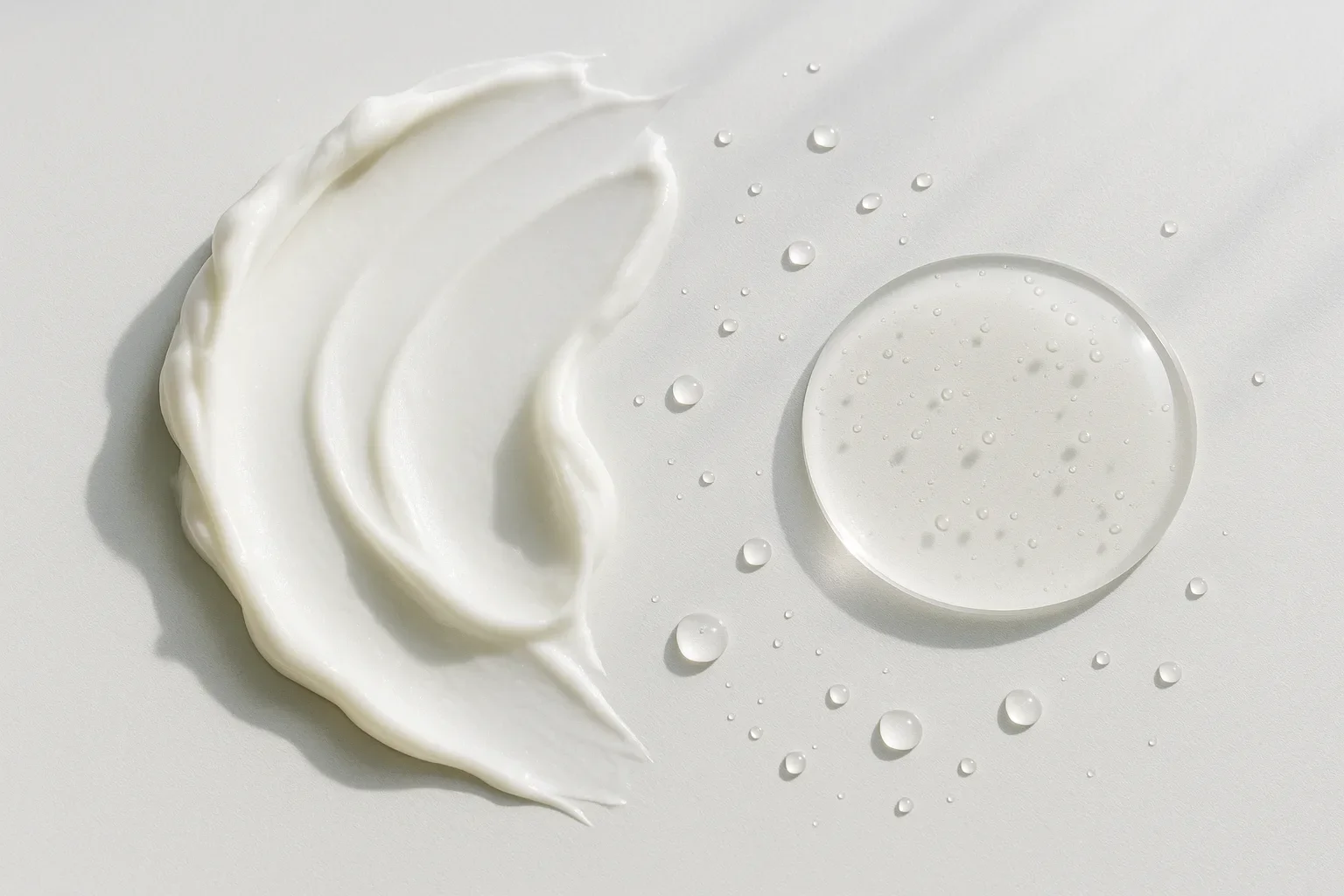
Azulene: Why You Shouldn't Just Look at the Content
Azulene is a deep teal-colored ingredient extracted from sources like chamomile, and has long been used in soothing skincare products. That's why many people first check 'what percentage of azulene is in this product' when choosing one.
However, the soothing effect of a cosmetic product depends less on the content of a single ingredient and more on the composition—the ratio in which that ingredient is combined with other soothing, moisturizing, and barrier ingredients. Even with the same azulene content, the actual effect felt can differ depending on the overall formulation, the pH that touches the skin, and the other ingredients included.
Especially when the skin barrier is weakened, such as right after a procedure, it's safer to also check whether the ingredient relieves irritation, how well the formulation spreads, and whether irritating ingredients have been excluded.
The Trap of Listed Content — What Matters More Than the Number
Just because azulene appears high up on the ingredient list doesn't necessarily mean the soothing power is high. While the full ingredient list is ordered by content, a more reliable way to confirm actual product safety and irritation relief is through human application tests or irritation tests conducted on the finished product.
In other words, rather than focusing on a number like 'what % azulene,' checking clinical trial data on how redness, barrier function, and hydration indicators actually changed after applying the cream provides a more reliable basis for judging the overall formulation.
For sensitive skin, especially skin recovering after a procedure, it's recommended to also check whether the formulation contains a balanced mix of ingredients like allantoin, panthenol, beta-glucan, and ceramides that can help soothe irritation and support hydration and barrier care.
Why different skin conditions at different stages require different formulation approaches
For about 1-3 days right after a procedure, redness and heat sensation are prominent, requiring a light formulation centered on soothing and barrier care. During this period, formulations with low fragrance and alcohol content, which can cause irritation, and centered on soothing and barrier-care ingredients can be helpful.
From day 4 onward, as redness subsides, tightness and fine flaking from deep dehydration often become more noticeable. During this period, switching to a formulation centered on deep hydration that fills moisture into the deeper layers of the stratum corneum is advantageous for managing skin condition.
As such, even for the same purpose of 'soothing,' the direction of formulation needed changes depending on the stage, so whether it's azulene or another soothing ingredient, it's more reasonable to choose based on 'whether the formulation suits my current skin condition' rather than judging the whole product by a single content percentage.
Try dividing your home care into stages like this
Stage 1 (right after procedure to day 3): Since redness and heat sensation remain, minimize irritation by applying a thick layer without rubbing and letting it absorb. After cleansing and lightly smoothing the skin with toner, apply a soothing and barrier-care focused cream mainly to areas with redness rather than the entire face.
Stage 2 (from day 4 onward): Once redness begins to subside, switch to managing deep dehydration. Gently patting in a formulation that fills moisture into the stratum corneum, layering it in, helps maintain a comfortable condition from the inside without feeling like it's sitting on top of the skin.
Across both stages, maintaining basic habits such as sun protection, avoiding hot water when washing your face, and minimizing friction from masks helps you properly feel the effects of a well-formulated cream.
Recovery after a procedure is determined by home care
If you want to check the balance of the overall formulation rather than just the content percentage, you can refer to a 2-STEP system designed for different post-procedure stages. The ZXQMAGAZINETERMAVIEWZXQ cream is composed so that it can be managed with a formulation suited to changing skin conditions: an Ultra Cera-Rich Cream (clinical name Cera-Vieu) centered on soothing and barrier care for the first 1-3 days right after a procedure, and a Hydro Re-Boosting Cream (clinical name Renew-Vieu) centered on deep hydration for the deep dehydration management period from day 4 onward.
물리적 자극으로 붉어진 피부의 붉은기 진정에 도움. 개인차가 있을 수 있습니다.
출처 P&K 피부임상연구센타 시험성적서 (PNK-26224-RI2R)
물리적 자극으로 손상된 장벽이 손상 전 수준으로 회복되는 데 도움. 개인차가 있을 수 있습니다.
출처 P&K 피부임상연구센타 시험성적서 (PNK-26224-RI2R)
자극 후 건조함 케어에 도움. 개인차가 있을 수 있습니다.
출처 P&K 피부임상연구센타 시험성적서 (PNK-26223-RI1R)
피부결 정돈에 도움. 개인차가 있을 수 있습니다.
출처 P&K 피부임상연구센타 시험성적서 (PNK-26223-RI1R)
FAQ
- Does a higher azulene content mean better soothing effect?
- It's hard to judge based on content alone. Since the overall composition, the soothing and moisturizing ingredients blended together, and the texture of the formulation all work together, it's more accurate to refer to human application test results conducted on the finished product.
- Is it okay to apply an azulene-containing cream right after a procedure?
- Rather than focusing on the ingredient name, it's recommended to first check whether the product is designed for irritation relief and barrier care, and whether it has been confirmed as non-irritating in a primary irritation test. Since the skin is in a sensitive state at this time, it's safer to test a small amount first.
- How can I tell if a composition is good?
- It helps to check whether the full ingredient list contains a balanced mix of soothing, moisturizing, and barrier care ingredients (such as panthenol, allantoin, ceramides, beta-glucan, etc.), and to check how indicators like redness, barrier function, and hydration actually changed through human application testing.
- Do I really need to use separate creams for right after a procedure and during recovery?
- It's not essential, but since the skin's care needs differ by stage, using separate products allows for more detailed care tailored to the skin's condition at each stage.
Related products
 하이드로 리-부스팅 크림Buy
STEP 2 · 회복기 속보습
 울트라 세라-리치 크림Buy
STEP 1 · 시술 직후 진정·장벽 케어