
Ceramide 5 Types: Content vs Composition, Which Matters More?
For ceramides, 'composition'—whether they are formulated in a ratio similar to skin lipids alongside cholesterol and fatty acids—plays a bigger role in the felt effect of barrier care than the numerically labeled 'content (ppm)'. Even with the same 5 types of ceramides, absorption and the feeling of adherence can vary depending on formulation design. The key is to check the balance of the combined ingredients rather than just looking at the numbers on the ingredient list.
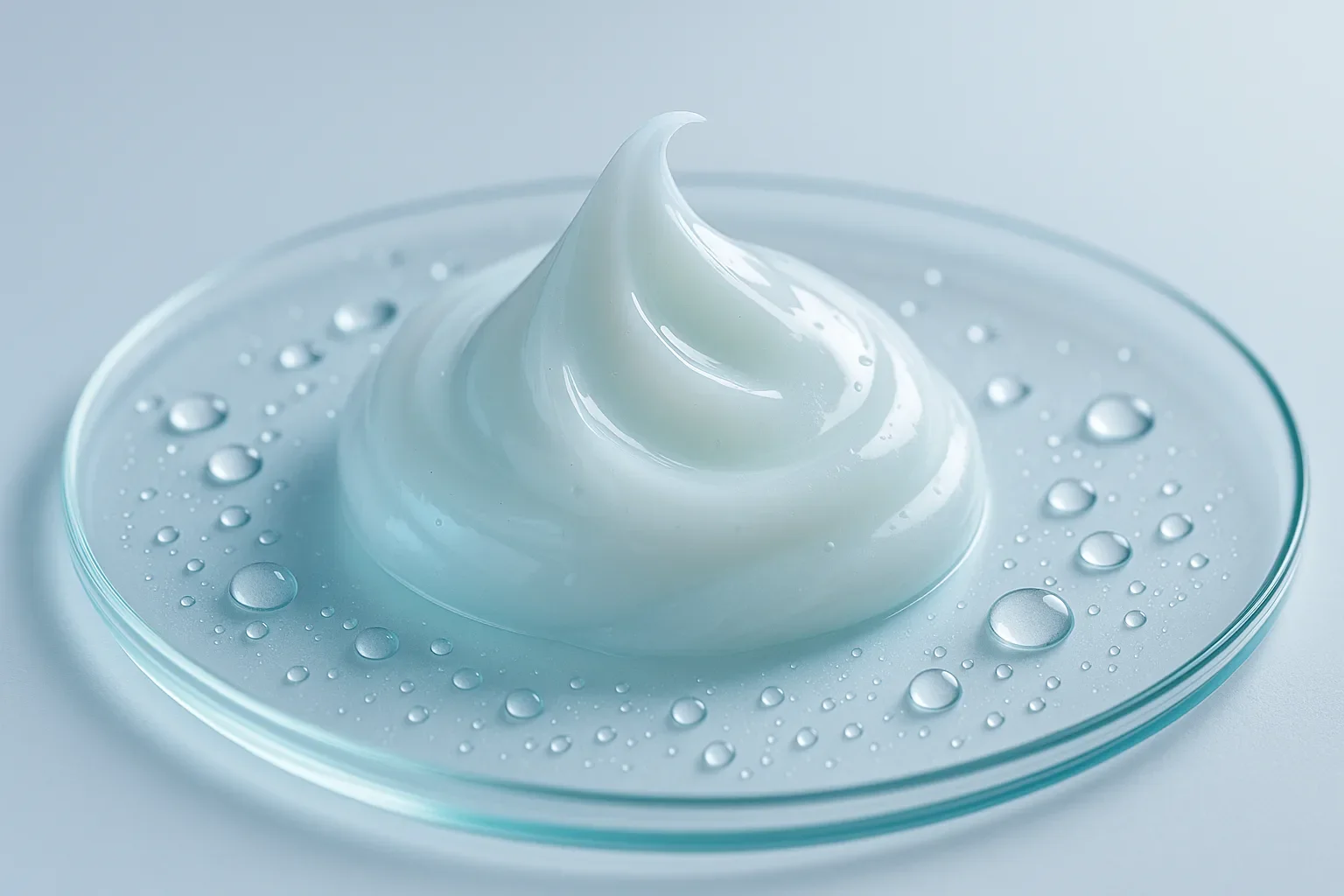
When you see numbers like 'ceramide 500ppm' or 'ceramide 23,000ppm' on a cosmetic ingredient list, it's easy to assume that a higher content is naturally better. However, ceramide is not an ingredient that works alone—it is one of the lipid components that make up the skin's stratum corneum. Therefore, rather than how 'much' is contained, the ratio and the other ingredients it is combined with can be a more important factor in the felt effect of skin barrier care.
Why 'composition' matters for ceramides
The skin's stratum corneum is often compared to bricks (corneocytes) and the mortar (intercellular lipids) that fills the space between them. This intercellular lipid is made up of three lipids—ceramide, cholesterol, and fatty acids—stacked in a certain ratio to form a layered structure, which prevents moisture loss and protects the skin from external irritants.
The problem is that simply adding ceramide at a high concentration doesn't necessarily reproduce this lamellar structure as is. Ceramides, cholesterol, and fatty acids need to be combined in a ratio similar to skin lipids to create an environment that can support barrier care. In other words, looking at how these three ingredients are designed together is a more meaningful approach than focusing on a single number like 'ceramide at X ppm.'
Additionally, ceramides are known to play slightly different roles within the skin depending on their type—NP, NS, AS, AP, EOP, and so on—so a formulation combining multiple types, like a '5-type complex,' may be a more balanced approach than a high concentration of a single ceramide type.
Signs of a weakened skin barrier and how they change over time
When the barrier weakens, the skin initially feels tight and rough. During this period, products you normally use may more easily cause stinging or redness.
If irritation continues or recovery is delayed, it can progress to a stage where fine flaking occurs or skin texture becomes rough. At this point, moisture often just sits on the surface, leaving an underlying feeling of tightness.
With appropriate care, skin texture and hydration generally tend to return gradually to pre-irritation levels over the course of several days to several weeks. However, the speed and perception of recovery can vary by individual.
Try approaching home care step by step
Step 1 is minimizing irritation. It's best to avoid rubbing too hard when cleansing, and to pause exfoliation or high-concentration acid ingredients until the barrier stabilizes.
Step 2 is supporting barrier care with a product that balances ceramides, cholesterol, and fatty acids. During this period, it may help to prioritize a low-irritation formulation over products with strong fragrances or high alcohol content.
Step 3 is replenishing deep hydration. Even if the skin appears calm on the surface, it may still be dry underneath, so combining with moisturizing care that delivers hydration deep into the stratum corneum can help refine skin texture.
ZXQMAGAZINETERMABJU CreamZXQ's approach: composition design over concentration
Against this backdrop, ZXQMAGAZINETERMABJU CreamZXQ focused on designing its 5-type ceramide complex together with cholesterol and fatty acids in a ratio similar to skin lipids. The Ultra Cera-Rich Cream (STEP1), designed for skin made sensitive right after a procedure, centers on the 5-type ceramide complex and panthenol to focus on redness and barrier care, while the Hydro Re-Boosting Cream (STEP2), designed for deep hydration during recovery, is formulated to help refine skin texture and maintain 24-hour hydration.
Rather than competing on a single ceramide concentration, both products are notable for being designed with a balanced composition of ceramides, cholesterol, and fatty acids, combined with soothing and moisturizing ingredients such as panthenol and allantoin.
Post-procedure recovery depends on home care
Given that 'composition' matters more than the numerical content of ceramides, ABZU Cream proposes a 2-STEP routine: immediately after procedures (days 1-3), the Ultra Cera-Rich Cream focuses on barrier care centered on a complex composition of 5 types of ceramides, and during the recovery period (from day 4 onward), the Hydro Re-Boosting Cream continues with deep hydration and skin texture care. You may consider a home care routine that follows a composition design tailored to each stage.
손상된 장벽이 손상 전 수준으로 회복되는 데 도움. 개인차가 있을 수 있습니다.
출처 P&K 피부임상연구센타 시험성적서 (PNK-26224-RI2R)
손상된 장벽이 손상 전 수준으로 회복되는 데 도움. 개인차가 있을 수 있습니다.
출처 P&K 피부임상연구센타 시험성적서 (PNK-26223-RI1R)
피부결이 자극 전 수준으로 정돈되는 데 도움. 개인차가 있을 수 있습니다.
출처 P&K 피부임상연구센타 시험성적서 (PNK-26223-RI1R)
FAQ
- Is a higher ceramide content always better?
- Not necessarily. Ceramides can help create an environment similar to the skin's lipid structure when they work together with cholesterol and fatty acids in a certain ratio, so it's more meaningful to look at the overall compositional balance rather than a single content figure.
- Do different types of ceramides (NP, NS, AS, etc.) have different effects?
- Different types of ceramides are known to have slightly different distributions and roles within the skin. For this reason, combining several types rather than adding a high amount of just one type is sometimes considered.
- Can you feel an effect right away when the barrier is weakened?
- There are individual differences, but some people feel a change right after starting soothing care immediately following irritation. However, visible changes such as skin texture or moisture feel may require consistent care over several days to several weeks.
- Can I use a ceramide product together with a moisturizing cream?
- Yes, it can help to separate the barrier care stage from the deep moisturizing stage. You might consider using barrier-focused products during the initial period of strong irritation, and deep-moisturizing-focused products once the skin has settled down to some extent.
Related products
 하이드로 리-부스팅 크림Buy
STEP 2 · 회복기 속보습
 울트라 세라-리치 크림Buy
STEP 1 · 시술 직후 진정·장벽 케어