
Criteria for Choosing Collagen Cream: What to Look for in the Ingredient List
Because collagen molecules are large and difficult to absorb directly into the skin, when choosing a cream, it's more important to look at the combination of supporting ingredients—such as ceramide, panthenol, and adenosine—that help fill the skin barrier and create an elastic skin environment, rather than focusing on the 'collagen content' number. Especially during sensitive periods like before and after lifting procedures, it's also important to check whether the product has been verified as non-irritating.
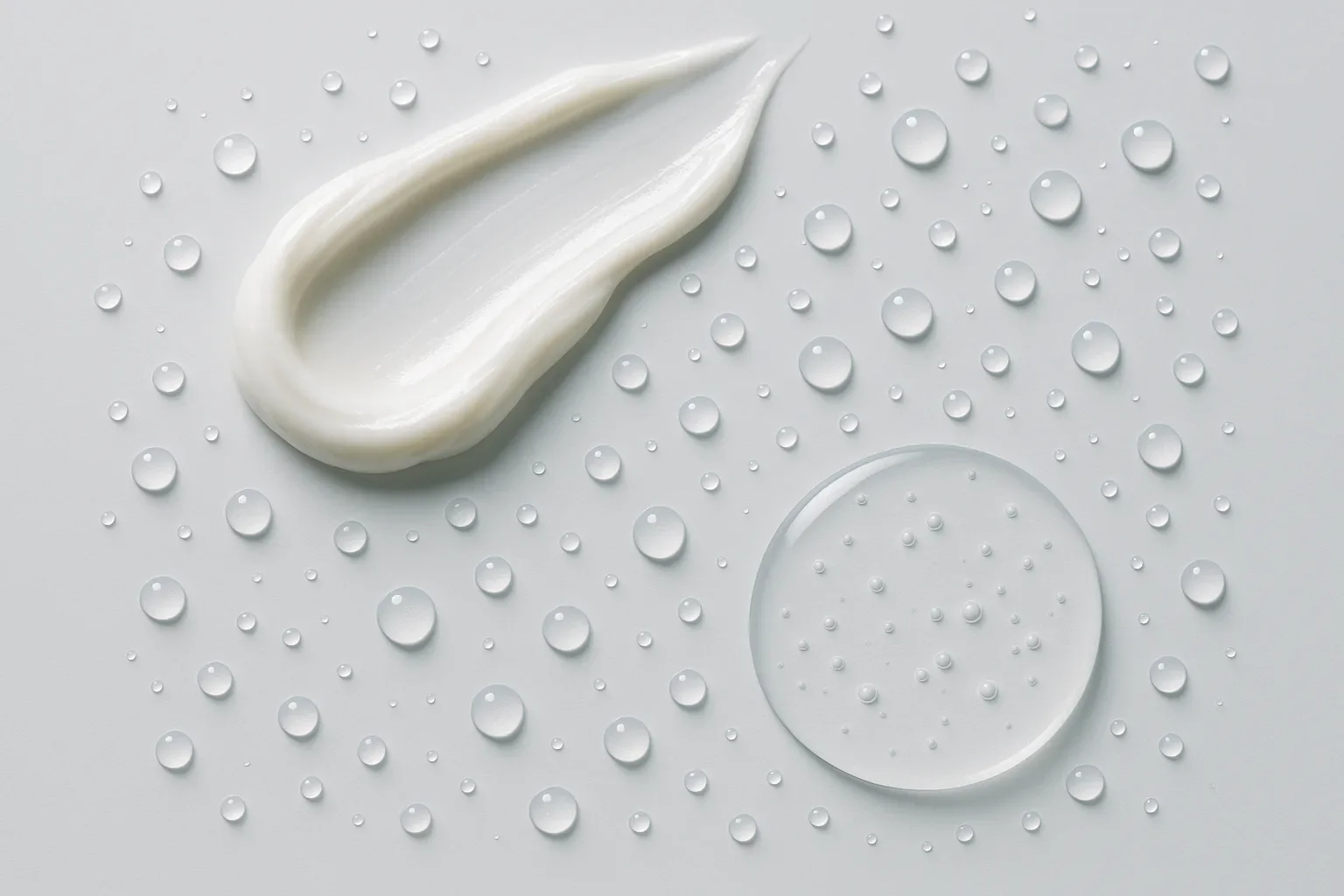
When you see the phrase 'contains collagen' on a cosmetics shelf, it somehow raises expectations that it will work wonders for elasticity. However, collagen has a large and dense molecular structure, making it difficult for it to penetrate deep into the skin when applied as a cream. That's why, when choosing a collagen cream, it's more practical to look at the combination of other ingredients that support the skin's own elasticity care environment, rather than the labeled collagen content number.
Why Is Collagen Hard to Absorb Even When Applied Topically?
The collagen found in the skin's dermis is a protein that our body produces directly. Collagen ingredients used in cosmetics are mostly processed into low-molecular-weight forms, but it's still structurally difficult for them to pass through the stratum corneum and reach the dermis. In other words, it's more accurate to understand the role of collagen cream not as 'filling in' collagen, but as moisture care that gently wraps the skin surface to help retain hydration.
So what should you look for when choosing a cream with elasticity care in mind? The key is a combination of ingredients similar to the skin's own lipid structure, along with supporting ingredients that can help with elasticity care. In particular, as we age, the skin barrier tends to thin and moisture retention capacity declines, which often causes elasticity to appear to sag—so product formulations that consider both barrier care and elasticity care together can be helpful.
Skin Condition Varies by Stage, So Cream Selection Should Too
The skin's normal state and the state right after a lifting procedure are completely different. The period from the day of the procedure to day 3 is a sensitive time when heat sensation and redness remain, so calming and barrier care should take priority over elasticity care during this time. From day 4 onward, as redness subsides, inner tightness and dryness become more noticeable, so it's natural to gradually begin incorporating elasticity care ingredients alongside deep moisturizing from this point.
In other words, rather than approaching skincare with the idea that 'one collagen cream solves everything,' it's more realistic to shift gradually from calming-focused care to moisture-and-elasticity-focused care according to the stage of your skin's condition.
What to Actually Check on the Ingredient List
① Ceramide-cholesterol-fatty acid combination: When composed in a ratio similar to the skin's own lipids, this can help with barrier care. Once the barrier is stable, elasticity care ingredients applied on top are more likely to work effectively.
② Panthenol: A representative ingredient that helps with moisturizing and skin calming, serving as a benchmark for whether a product can be used comfortably even during sensitive periods.
③ Adenosine: Widely used as an elasticity care ingredient, it plays a supportive role in helping manage the skin's own condition rather than acting as collagen itself.
④ Irritation test status: Checking whether a product has been determined to be non-irritating in a primary irritation test helps gauge whether it can be used with confidence even during sensitive periods.
Reading the ingredient list based on these four criteria allows for a much more practical judgment than relying on a single number like 'collagen content.'
How to Divide Your Care Before and After a Procedure
If you're about to undergo or have recently undergone a lifting or thermal energy procedure (such as Ultherapy, Thermage, Shurink, or InMode), a two-step approach can help: using a product focused on calming and barrier care for the first 1-3 days right after the procedure, and from day 4 onward during recovery, using a product that addresses both deep moisturizing and elasticity care. Managing your skin by dividing care into these stages allows for much more systematic skin management than choosing based solely on collagen content numbers.
Post-Procedure Recovery Depends on Home Care
The 2-STEP formulation of ABIJOU Cream reflects this stage-based care concept directly. For the first 1-3 days right after a procedure, the 'Ultra Cera-Rich Cream (STEP1),' containing a complex of 5 types of ceramides and panthenol, provides calming and barrier care; from day 4 onward during recovery, the 'Hydro Re-Boosting Cream (STEP2),' containing panthenol, niacinamide, and adenosine, continues with deep moisturizing and elasticity/skin texture care. Both products were determined to be non-irritating in primary irritation tests (P&K Skin Research Center; individual results may vary). 50ml each, 59,000 KRW. Learn more → ABIJOU Cream (abijoushop.com).
물리적 자극으로 붉어진 피부의 진정에 도움. 개인차가 있을 수 있습니다.
출처 P&K 피부임상연구센타 시험성적서 (PNK-26224-RI2R)
손상된 장벽이 손상 전 수준으로 회복되는 데 도움. 개인차가 있을 수 있습니다.
출처 P&K 피부임상연구센타 시험성적서 (PNK-26224-RI2R)
자극 후 건조함 케어에 도움. 개인차가 있을 수 있습니다.
출처 P&K 피부임상연구센타 시험성적서 (PNK-26223-RI1R)
피부결 정돈에 도움. 개인차가 있을 수 있습니다.
출처 P&K 피부임상연구센타 시험성적서 (PNK-26223-RI1R)
FAQ
- Is a cream with a higher collagen content always better?
- Rather than focusing on the content number, it's more practical to check whether the ingredient composition also supports the skin barrier and moisture—such as ceramide and panthenol—and whether it has undergone irritation testing.
- Which is more effective, oral collagen supplements or topical collagen cream?
- This article only covers information from a cosmetics (topical product) perspective. The internal effects of ingested products fall outside the scope of cosmetics, so consulting a specialist is recommended.
- Is it okay to apply elasticity cream right after a procedure?
- For the first 1 to 3 days after a procedure, when redness and warmth remain and the skin is sensitive, it's best to prioritize soothing and barrier-care-focused products first. Once the skin stabilizes after day 4, it's natural to move on to products containing moisturizing and elasticity care ingredients.
- Does adenosine play the same role as collagen?
- Adenosine is not a substitute for collagen itself, but is classified as a supporting ingredient that helps the skin's own elasticity care.
Related products
 하이드로 리-부스팅 크림Buy
STEP 2 · 회복기 속보습
 울트라 세라-리치 크림Buy
STEP 1 · 시술 직후 진정·장벽 케어