
Criteria for Choosing Azulene: Check This First on the Ingredient List
Azulene is a blue-colored ingredient derived from chamomile, known to help soothe skin, but the actual effect can vary greatly depending on each product's concentration and formulation. Rather than looking at azulene alone, it's key to check whether soothing and barrier-supporting ingredients like panthenol, allantoin, and ceramides are balanced together, and whether irritation test results are disclosed.
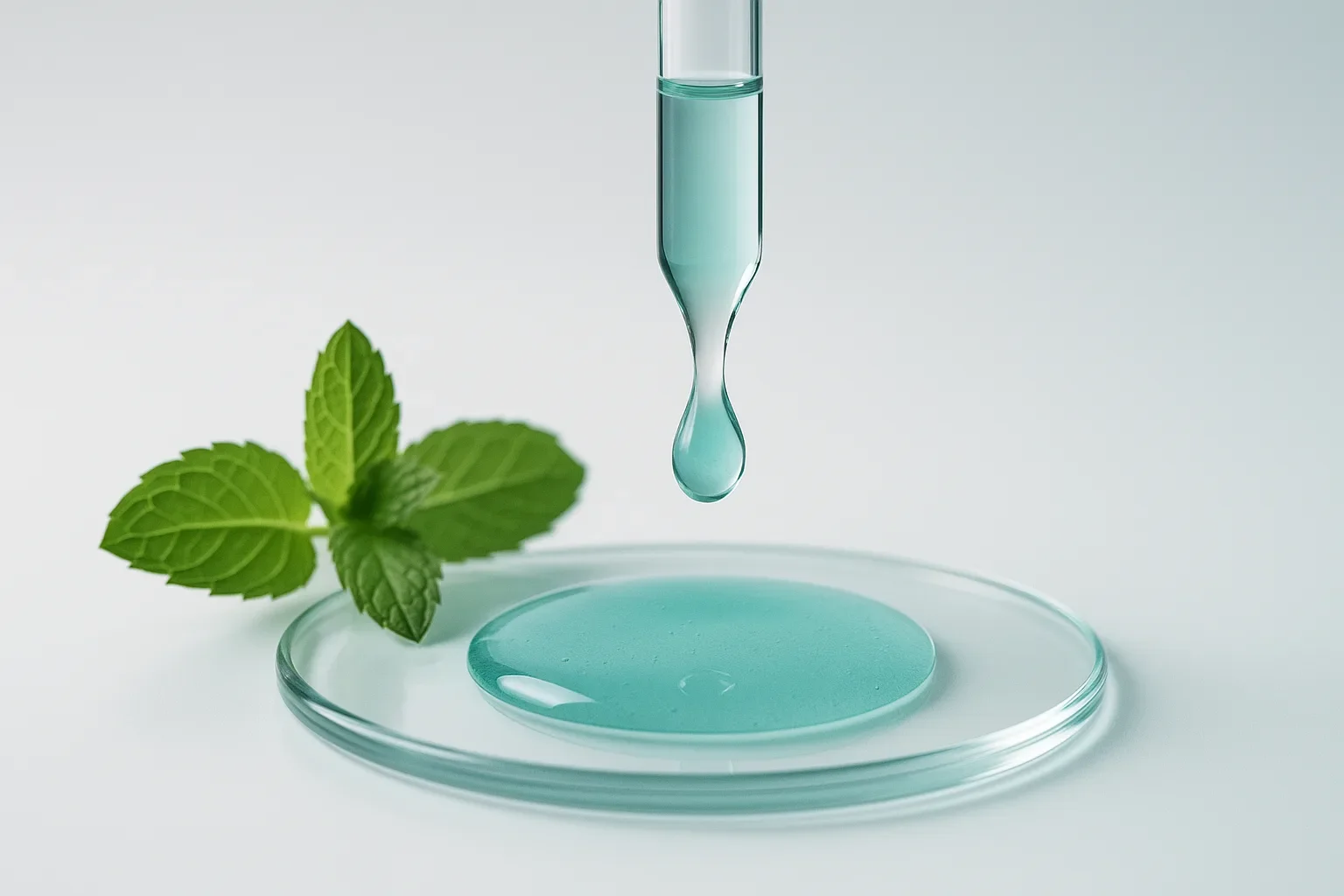
After a procedure, or whenever the seasons change and skin becomes sensitive, people naturally look for 'soothing ingredients.' Azulene is a name frequently encountered on cosmetic ingredient lists, but the criteria for judging 'which azulene product is good' are not well known. Today, we summarize the points you should actually check when choosing azulene.
What is azulene and why is it used as a soothing ingredient
Azulene is a deep blue-colored ingredient obtained from distilling chamomile flowers, and has long been used in cosmetics as an ingredient that helps soothe redness in irritated skin. Due to its distinctive blue color, it's also called 'chamomile blue.'
However, azulene tends to be more helpful for skin condition care when combined with other soothing ingredients like panthenol, allantoin, and beta-glucan, rather than producing a strong effect on its own. So it's difficult to judge a product's soothing power based solely on the fact that it contains azulene.
Things that are hard to know from the ingredient list alone
Ingredient lists often don't indicate concentration, so even products labeled as 'containing azulene' can have vastly different actual amounts. Also, the further back azulene appears in the ingredient list, the more likely it was included in a small amount.
For this reason, rather than choosing a product based on azulene alone, it's more practical to look at how broadly—and in what ratio—soothing, moisturizing, and barrier care ingredients are combined together.
3 criteria to check instead of, or along with, azulene
First, the diversity of soothing ingredients. Rather than a single ingredient like azulene, products that combine multiple soothing-type ingredients such as panthenol, allantoin, beta-glucan, scutellaria extract, and echinacea may be more helpful for post-irritation condition care.
Second, whether barrier care ingredients are present. The skin barrier is just as important as soothing. If ingredients similar in composition to skin lipids, such as ceramides, cholesterol, and fatty acids, are included together, they can help create an environment for recovery after irritation.
Third, whether irritation test results are disclosed. Whether a product has been judged non-irritating in a human skin primary irritation test, and whether this can be verified based on an official test report, is a standard for trust.
Care needs differ depending on the stage of sensitivity
The first few days right after skin becomes sensitive are a time to focus on calming redness and heat. During this period, a lightweight-textured cream with a high proportion of soothing ingredients can help.
After some time, once redness and irritation have subsided to some degree, a tendency toward tightness and dryness inside the skin may appear. At this point, it's a natural flow to switch to a product that places more weight on deep moisturizing and texture care rather than soothing ingredients.
Building a step-by-step home care routine based on ingredient test results
ABZU Cream is designed to be used differently depending on the stage of sensitivity, combining ingredients that help with soothing and barrier care—such as panthenol, allantoin, and 5 types of ceramides—instead of azulene. Both products are based on results judged non-irritating in human skin primary irritation tests.
In the early stage when redness and heat remain, Ultra Cera-Rich Cream (clinical name: Ultra Cera-Bju) can help with soothing and barrier care, and in the stage after irritation has subsided but tightness remains, Hydro Re-Boosting Cream (clinical name: Hydro Renew-Bju) can help with deep moisturizing and texture care.
Home care determines recovery after procedures
Skin that becomes sensitive due to procedures or seasonal changes requires different care depending on the stage. ABZU Cream is a 2-STEP solution consisting of Ultra Cera-Rich Cream for the early stage when redness and heat remain, and Hydro Re-Boosting Cream for caring for tightness after irritation has subsided. Each is 50ml, priced at 59,000 won, and detailed ingredients and test results can be found on the official online store.
물리적 자극으로 붉어진 피부의 붉은기 진정에 도움. 개인차가 있을 수 있습니다.
출처 P&K 피부임상연구센타 시험성적서 (PNK-26224-RI2R)
물리적 자극으로 손상된 장벽이 손상 전 수준으로 회복되는 데 도움. 개인차가 있을 수 있습니다.
출처 P&K 피부임상연구센타 시험성적서 (PNK-26224-RI2R)
인체 피부 일차자극 시험 결과 비자극성으로 판정.
출처 P&K 시험성적서 (PNK-26225-I6R)
화학적 자극으로 붉어진 피부 진정에 도움. 개인차가 있을 수 있습니다.
출처 P&K 피부임상연구센타 시험성적서 (PNK-26223-RI1R)
자극 후 건조함 케어에 도움. 개인차가 있을 수 있습니다.
출처 P&K 피부임상연구센타 시험성적서 (PNK-26223-RI1R)
FAQ
- Is a higher azulene content always better?
- A higher content is not always better. The balance with other moisturizing and barrier-care ingredients is more important than the azulene content alone, and it's better to check the overall formulation and irritation test results together.
- Which is more helpful for soothing, azulene or panthenol?
- Both ingredients can help with soothing and moisturizing, working in different ways. Rather than choosing just one, it may be helpful to choose a product that combines both.
- Can I use azulene-containing products after a procedure?
- It's more important to check the product's irritation test results and overall formulation than the ingredient itself. During sensitive periods after a procedure, it's safer to prioritize products that have been tested as non-irritating.
- Should I use soothing ingredients and barrier-care ingredients together?
- Yes, soothing and barrier care play complementary roles. Even if redness subsides, dryness may remain if the barrier is still weakened, so considering both together depending on the timing can be helpful.
Related products
 하이드로 리-부스팅 크림Buy
STEP 2 · 회복기 속보습
 울트라 세라-리치 크림Buy
STEP 1 · 시술 직후 진정·장벽 케어