
Causes and Care for Jawline Acne: Is It Hormonal?
Recurring acne along the jawline and lower face is reported to be associated with fluctuations in androgens (male hormones) and the heightened sensitivity of sebaceous glands. Topical treatments or oral medications may be used depending on the situation, but the treatment approach should be decided in consultation with a specialist, taking into account skin condition and individual differences. This article summarizes the factors known to contribute to jawline acne and the home care measures that can be considered alongside management.
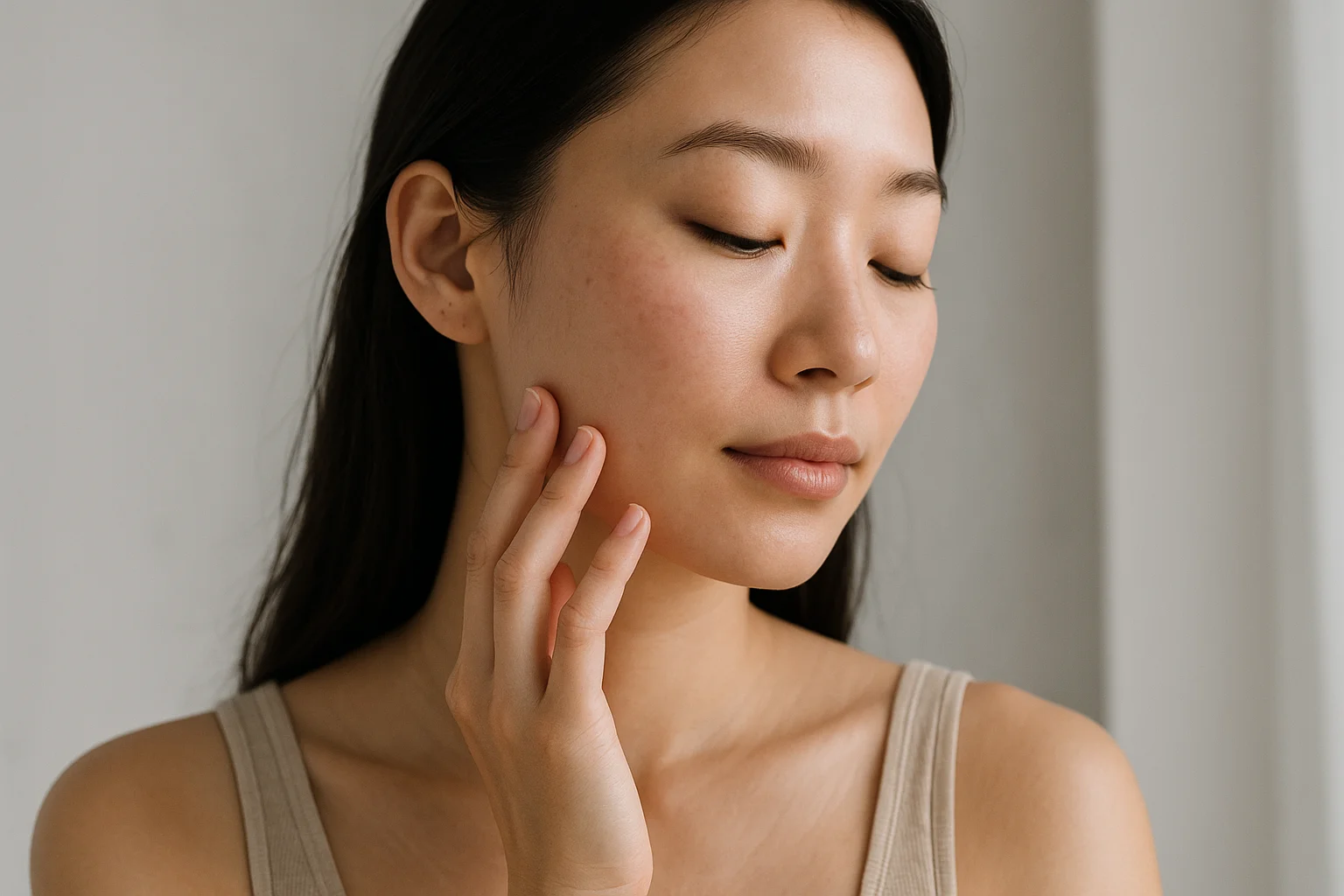
Acne that repeatedly appears along the jawline is often explained differently from acne that occurs on the forehead or cheeks. Unlike upper- and side-face acne, which is often attributed to contact factors—such as scalp products running down onto the forehead or a phone touching the cheek—acne on the jaw and lower face is reported to be related to internal hormonal changes.
Why Does Acne Keep Appearing on the Jawline?
The jaw and lower face are described as areas where sebaceous glands are relatively sensitive to changes in androgen (male hormone) levels. When androgen levels fluctuate, these glands may react excessively, increasing sebum production. This sebum can mix with dead skin cells and clog the follicles, potentially leading to acne.
In particular, jawline acne has been reported to worsen during periods of significant hormonal change, such as before menstruation or in early pregnancy. Because of this, it has been noted that women with jawline and lower-face acne may respond relatively well to hormone-related treatments compared to acne in other areas, although the degree of response can vary greatly between individuals and should not be generalized.
One point worth addressing is the common belief that "jawline acne occurs due to poor uterine health." Some clinical opinions view this as an unverified myth, and directly linking the cause of jawline acne to the health of a specific organ should be approached with caution.
How Is Treatment Approached?
For managing jawline acne, topical treatments such as retinoids, topical antibiotics, and benzoyl peroxide are often considered first. When symptoms cover a wider area or are not adequately controlled by topical treatment alone, oral antibiotics may be used alongside topical treatment for several months.
In cases where a clear link to hormonal fluctuation is present, medications such as spironolactone may be mentioned. Spironolactone is an aldosterone receptor antagonist that is explained to work by reducing testosterone production and competitively inhibiting androgen receptor binding in the skin, though the degree and speed of effect are known to vary considerably between individuals.
However, both domestic and international guidelines classify the level of evidence for spironolactone as lower than that for combined oral contraceptives, and recent guidelines present it as only a "conditional recommendation," meaning it is not always the first choice of treatment. Due to common side effects such as diuretic effects, irregular menstruation, and breast tenderness, as well as the rare possibility of hyperkalemia, regular monitoring is recommended when using this medication. Whether such drug treatment is necessary and how it should be administered must be decided through consultation with a specialist, taking into account an individual's hormonal status, medical history, and other medications being taken.
Changes in the Skin During Treatment and Recovery
While using topical retinoids, antibiotics, or oral medications, the skin barrier may temporarily become sensitive, accompanied by dryness or redness. This can occur due to the nature of how these treatment ingredients work, and if symptoms persist or become severe, it is necessary to consult with the attending specialist to adjust the intensity or method of treatment.
During this period, it may help to incorporate home care aimed at reducing irritation and stabilizing the skin barrier. Avoiding cosmetics with irritating ingredients and simplifying the skincare routine to focus on soothing and moisturizing is generally recommended.
Recovery After Treatment Depends on Home Care
When the skin becomes sensitive, dry, or shows temporary redness during the treatment process, incorporating gentle, low-irritation soothing care that minimizes stimulation can be helpful. AbiJu Cream is designed as a 2-step routine with this period in mind. STEP 1, Ultra Cera-Rich, focuses on soothing redness and caring for the barrier of sensitized skin, while STEP 2, Hydro Re-Boosting, aims to provide deep moisture care for skin in the recovery phase. However, this does not replace the procedure or medication treatment itself, and the degree of perceived effect may vary by individual, so the treatment direction should be decided in consultation with a specialist.
FAQ
- Is jawline acne caused by poor uterine health?
- While this is a common belief, some clinical opinions view it as an unverified myth. Jawline acne is generally explained by multiple factors acting together, such as androgen fluctuations and sebaceous gland reactivity, rather than by the health of a specific organ, so it is difficult to attribute it to a single cause.
- Is it normal for jawline acne to worsen before my period?
- It has been reported that jawline acne tends to worsen during periods of hormonal fluctuation, such as before menstruation or in early pregnancy. However, the severity of symptoms varies greatly among individuals, so if flare-ups are frequent and severe, it is advisable to consult a specialist to check the cause and appropriate management.
- Is spironolactone recommended for everyone?
- Spironolactone is one of the medications mentioned for hormone-related acne, but it is classified as a conditional recommendation in guidelines, and side effects such as diuretic effects, irregular menstruation, and breast tenderness have been reported, requiring regular monitoring. Whether to use it should be decided in consultation with a specialist, taking individual health status into account.
- How should I care for my skin if it becomes dry and sensitive during treatment?
- During topical or oral medication treatment, the skin barrier may temporarily weaken, leading to dryness or redness. During this period, incorporating gentle, soothing, and moisturizing home care can be considered, and if symptoms persist, it is important to discuss adjusting the treatment approach with the attending specialist.
Medically reviewed by 아비쥬의원 의료진. (September 10, 2026)