
Juvelook vs. Juvelook Volume: Comparing the Principles and Recovery Process
Juvelook and Juvelook Volume are both hybrid skin boosters that combine poly-D,L-lactic acid (PDLLA) with hyaluronic acid (HA), aiming to deliver immediate hydration along with collagen production stimulated over time. Juvelook Volume is based on the same principle but uses a higher PDLLA concentration, and is introduced as a product designed to create deeper volume. Which product is suitable depends on individual skin condition and goals, so a consultation with a specialist is necessary.
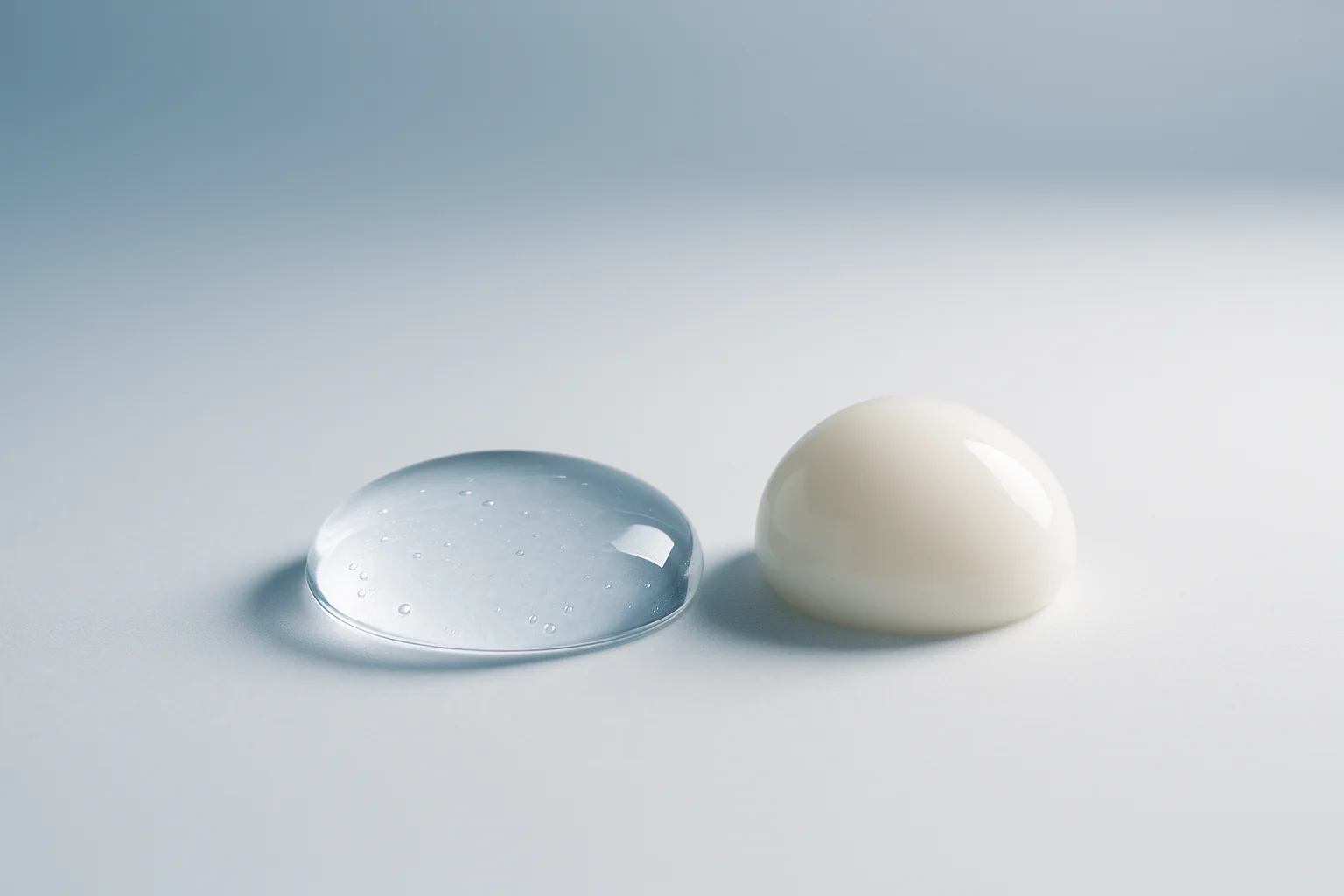
When researching dermatology procedures, you'll often come across both 'Juvelook' and 'Juvelook Volume.' Since these two products are based on the same platform but are described as differing in ingredient concentration and intended outcomes, it helps to first understand the underlying principles before comparing them.
- 1시술 직후HA 성분에 의한 즉각적 수분감·볼륨감, 일시적 붓기·발적 가능
- 2수일 이내미세 멍·붓기 완화, 자극 최소화·보습 중심 홈케어
- 3수 주~수개월PDLLA 성분에 의한 섬유아세포 활성 및 콜라겐 생성 자극
- 4회복·유지기점진적 변화 체감, 개인차에 따라 경과 상이
How Do Juvelook and Juvelook Volume Differ in Principle?
Juvelook is described as a hybrid skin booster that combines 42.5mg of poly-D,L-lactic acid (PDLLA) with 7.5mg of non-cross-linked hyaluronic acid (HA) in a single freeze-dried vial. HA is said to provide immediate hydration right after the procedure, while PDLLA microparticles measuring 10–40μm are introduced as stimulating fibroblast activity, leading to collagen production over time.
This dual mechanism of action is also mentioned in academic case reports. According to these reports, immediate volume appears right after the procedure due to increased skin thickness, followed secondarily by a delayed collagen remodeling effect. However, this is based on case report-level data covering a small number of cases, and the authors themselves note that further research is needed regarding long-term safety, optimal injection techniques, and comparisons with other procedures.
Juvelook Volume is based on the same platform but uses a higher PDLLA concentration of around 200mg, and is introduced overseas under the name 'Rennisna.' Its particle size is also reported to be larger than that of the original product, and it is described as designed to create volume at deeper layers rather than surface-level hydration. However, since specific comparative data between the two products is limited, it is advisable to consult with a specialist to determine which is better suited to your skin condition.
Differences in Approach by Treatment Area
Due to differences in ingredient concentration, the two products are often introduced for different clinical purposes. Juvelook, with its relatively lower concentration, is commonly used for procedures targeting surface-level improvements such as skin texture, tone, and fine lines, while the higher-concentration Juvelook Volume is sometimes considered for areas requiring structural volume, such as nasolabial folds or hollow cheeks. However, this is general introductory information, and actual application and treatment areas should be determined by a specialist based on individual skin condition and goals.
Onset of Effects, Progression, and Downtime
Immediately after the procedure, immediate hydration and volume from the HA component may be noticeable, and over the following weeks to months, the PDLLA component is said to stimulate collagen production, leading to gradual changes. However, the progression and perceived degree of these changes can vary depending on individual skin condition, age, and treatment area.
Right after the procedure, temporary redness, swelling, and minor bruising may appear at the injection site, and these are generally known to subside within a few days. The degree of downtime and recovery period also vary by individual, so it is important to thoroughly discuss the expected course with your practitioner before the procedure.
Recovery and At-Home Care After the Procedure
Right after a skin booster procedure, the skin barrier may be temporarily sensitive, so home care that avoids irritating ingredients and focuses on soothing and hydration can help support recovery. In particular, rubbing or pressing on the treated area should be avoided, and sun protection along with low-irritation products is recommended.
Maintaining skin's internal moisture balance during the recovery period, while collagen production is underway, can help support overall skin condition. However, it should be noted that home care serves a supportive role in managing skin condition and does not guarantee procedural results.
At-Home Care Plays a Key Role in Post-Procedure Recovery
Right after a procedure, sensitive skin needs to have irritation minimized and its barrier cared for as a priority. ABZU Cream is designed as a 2-STEP system for post-procedure home care: STEP1, Ultra Sera-Rich, is intended for soothing redness and barrier care immediately after the procedure, while STEP2, Hydro Re-Boosting, is designed for deep hydration care during the recovery period that follows. STEP1 may be referenced after lifting or heat-energy-based procedures, and STEP2 during the recovery period following skin booster procedures like Juvelook, though actual use should be determined based on individual skin condition.
FAQ
- Should I choose Juvelook or Juvelook Volume?
- Both products are based on the same platform but are described as differing in PDLLA concentration and particle size. The approach may vary depending on whether the goal is surface-level improvement or structural volume, so it is advisable to have your skin condition assessed and consult with a specialist before deciding.
- How long do the effects last?
- Changes based on collagen production stimulation are described as developing gradually over time, but the duration and degree of perceived results can vary depending on individual skin condition and lifestyle habits. It is best to confirm accurate information during a pre-procedure consultation.
- When can I start using cosmetics after the procedure?
- This can vary depending on the condition of the treated area, so it is best to follow the guidance of the practitioner who performed the procedure. In general, it is known that focusing on low-irritation soothing and hydrating products can help support recovery.
- I'm concerned about downtime—how long do swelling or bruising typically last?
- Temporary swelling, redness, and minor bruising may occur, and these are generally reported to subside within a few days, though individual differences exist. If any unusual symptoms persist during recovery, it is necessary to contact the clinic where the procedure was performed.
- Can anyone receive this procedure?
- Eligibility for the procedure may vary depending on skin condition, allergy history, and any underlying medical conditions. Suitability must always be determined through consultation with a specialist.
Medically reviewed by 아비쥬의원 의료진. (September 10, 2026)