
Tranexamic Acid Content vs Composition, Which Matters More?
With tranexamic acid, a high number on the label isn't everything. The actual effect on your skin depends much more on how it blends with other ingredients within the overall formulation (composition), and whether it's designed with your skin barrier condition in mind. Looking at 'balanced composition' rather than the number on the ingredient list is the more reasonable criterion for choosing products.
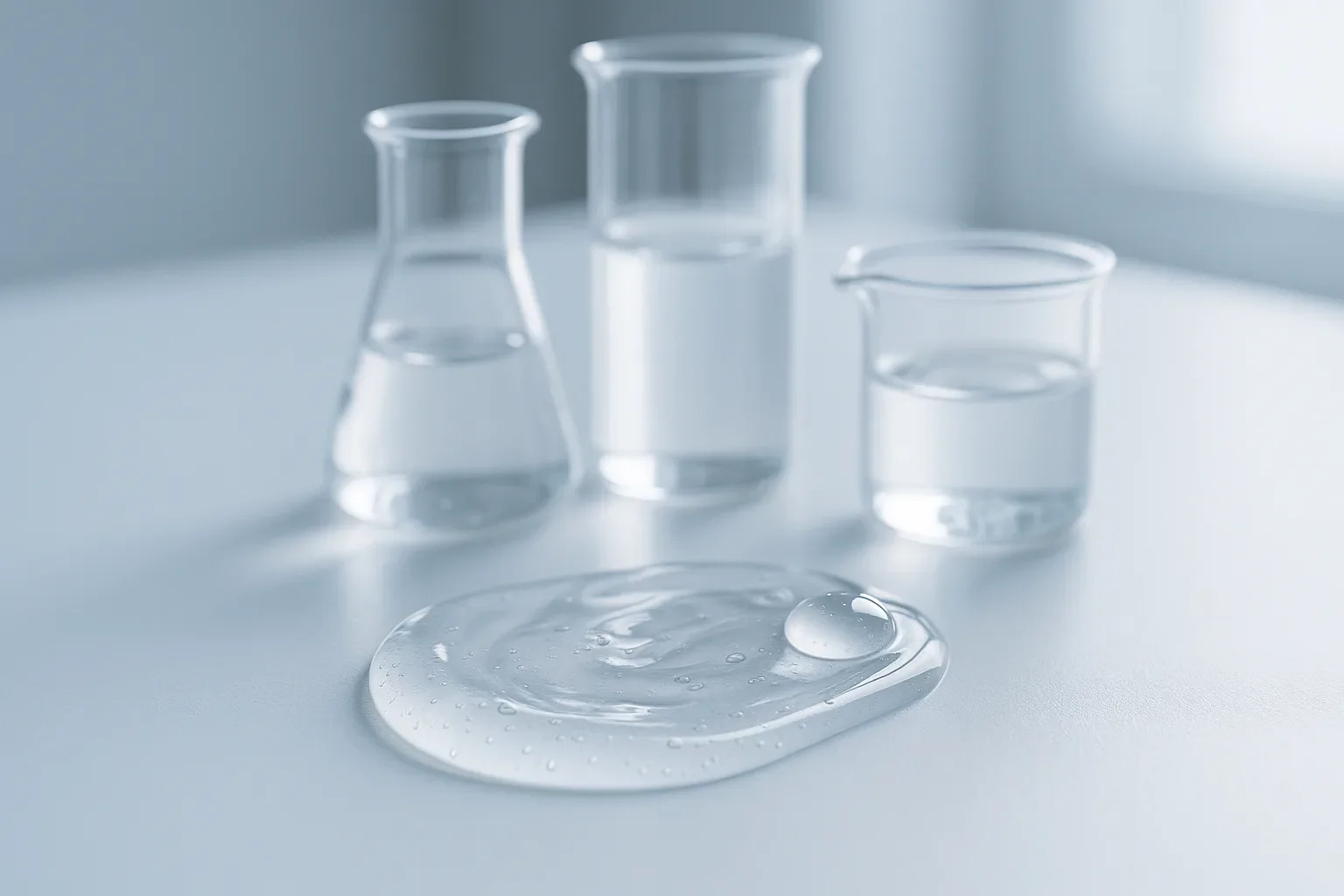
When choosing cosmetics, many people are drawn to phrases like 'contains X% tranexamic acid.' It's easy to think that higher content means a better product, but in reality it's not that simple.
Even with the same content, the overall formulation (composition) can greatly affect the stability on the skin, the feel of use, and the interaction with other ingredients.
Why Tranexamic Acid Is Hard to Judge by Content Number Alone
Tranexamic acid is an ingredient widely used in whitening functional cosmetics. However, ingredients blended into cosmetics don't work alone; they need to be combined with moisturizers, barrier care ingredients, pH adjusters, and more to be delivered to the skin stably.
Even with high content, if it's not stably dissolved within the formulation, or if a high-content ingredient touches skin with a weakened barrier as is, it can actually lead to irritation. Conversely, even at an appropriate content, if the composition is well designed, it can be gently absorbed into the skin.
This is why the concept of 'composition' matters. Composition doesn't refer to the content of a single specific ingredient, but to the ratio and form in which all the ingredients are blended to work on the skin. This is similar to how ceramides, cholesterol, and fatty acids need to be composed in a ratio similar to the skin's own lipids to help with barrier care.
Why Post-Procedure Skin Needs More Careful Consideration
Right after lifting procedures or skin booster treatments, the skin barrier is temporarily weakened. During this period, priority should be given to choosing products designed with a composition that doesn't burden the skin, rather than focusing on the concentration of functional ingredients.
During the first 1-3 days after a procedure, when redness and heat sensation remain, a light formulation focused on soothing and barrier care is suitable. From day 4 onward, during the recovery phase, it's natural to gradually add deep hydration and skin texture care.
If you skip this period and forcefully apply high concentrations of functional ingredients, sensitive skin may show irritation reactions. Therefore, when it comes to post-procedure care, it can be said that the phased composition and timing matter more than the ingredient concentration in determining results.
Try approaching your home care in phases like this
① Days 1-3 right after the procedure: Since this is a period with redness and heat sensation, it's best to apply thin, multiple layers of a low-irritation formulation focused on soothing and barrier care.
② Recovery phase from day 4 onward: As redness subsides, tightness and minor dryness tend to appear. At this stage, switching to a product focused on deep hydration and skin texture care is helpful.
③ Products containing functional ingredients such as tranexamic acid should be introduced gradually, after these two stages have stabilized to some degree, while monitoring for any irritation reactions—this is the safer approach.
Why composition matters more than concentration
In fact, the two ABZW cream products don't emphasize high concentrations of specific ingredients, but instead focus on composition designs tailored to the skin's condition at each stage. Right after a procedure, a composition centered on 5 types of ceramides and panthenol is used to focus on redness and barrier care, while during the recovery phase, a composition combining panthenol, ceramides, and niacinamide is used to focus on deep hydration and skin texture care.
In this way, 'when and in what ratio ingredients are combined' is more closely connected to actual usage experience and skin response than 'how much was added.'
Home care determines post-procedure recovery
For skin sensitized right after a procedure, a composition centered on 5 types of ceramides, like the Ultra Cera-Rich Cream, helps with redness and barrier care, while for tightness during the recovery phase, a composition with added panthenol and niacinamide, like the Hydro Re-Boosting Cream, helps with deep hydration and skin texture care—each designed for its respective stage. Before considering functional ingredients such as tranexamic acid, we recommend first stabilizing your skin condition with a 2-STEP home care routine equipped with phase-appropriate compositions.
물리적 자극으로 붉어진 피부의 붉은기 진정에 도움. 개인차가 있을 수 있습니다.
출처 P&K 피부임상연구센타 시험성적서 (PNK-26224-RI2R)
물리적 자극으로 손상된 장벽이 손상 전 수준으로 회복되는 데 도움. 개인차가 있을 수 있습니다.
출처 P&K 피부임상연구센타 시험성적서 (PNK-26224-RI2R)
자극 후 건조함 케어에 도움. 개인차가 있을 수 있습니다.
출처 P&K 피부임상연구센타 시험성적서 (PNK-26223-RI1R)
피부결 정돈에 도움. 개인차가 있을 수 있습니다.
출처 P&K 피부임상연구센타 시험성적서 (PNK-26223-RI1R)
FAQ
- Is a product with higher tranexamic acid content always more effective?
- It's hard to determine effectiveness by the content number alone. Whether it's stably blended with other ingredients within the overall formulation (composition) and can be delivered without irritating the skin must also be considered together.
- What exactly does it mean for a composition to be good?
- It's not about the amount of a single ingredient, but about the ratio and form in which multiple ingredients are designed to work for their intended purpose without irritating the skin. A representative example is ceramides, cholesterol, and fatty acids being composed in a ratio similar to the skin's own lipids.
- Can I use products containing tranexamic acid right after a procedure?
- In the 1-3 days right after a procedure, the skin is sensitive, so it's safer to first use light formulations focused on soothing and barrier care, and gradually add functional ingredients after redness has subsided.
- Does ABJU Cream emphasize a high tranexamic acid content?
- ABJU Cream is a 2-STEP recovery solution that focuses on composition designed for the skin condition at each stage after a procedure, rather than a high content of a specific ingredient.
Related products
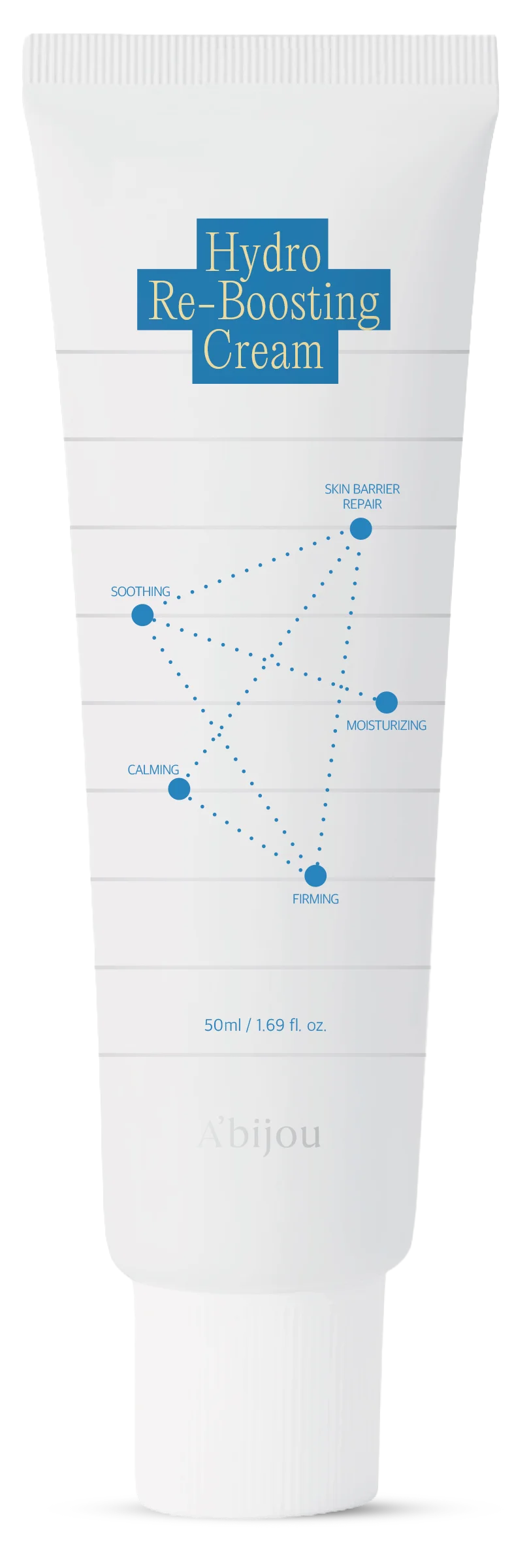 하이드로 리-부스팅 크림Buy
STEP 2 · 회복기 속보습
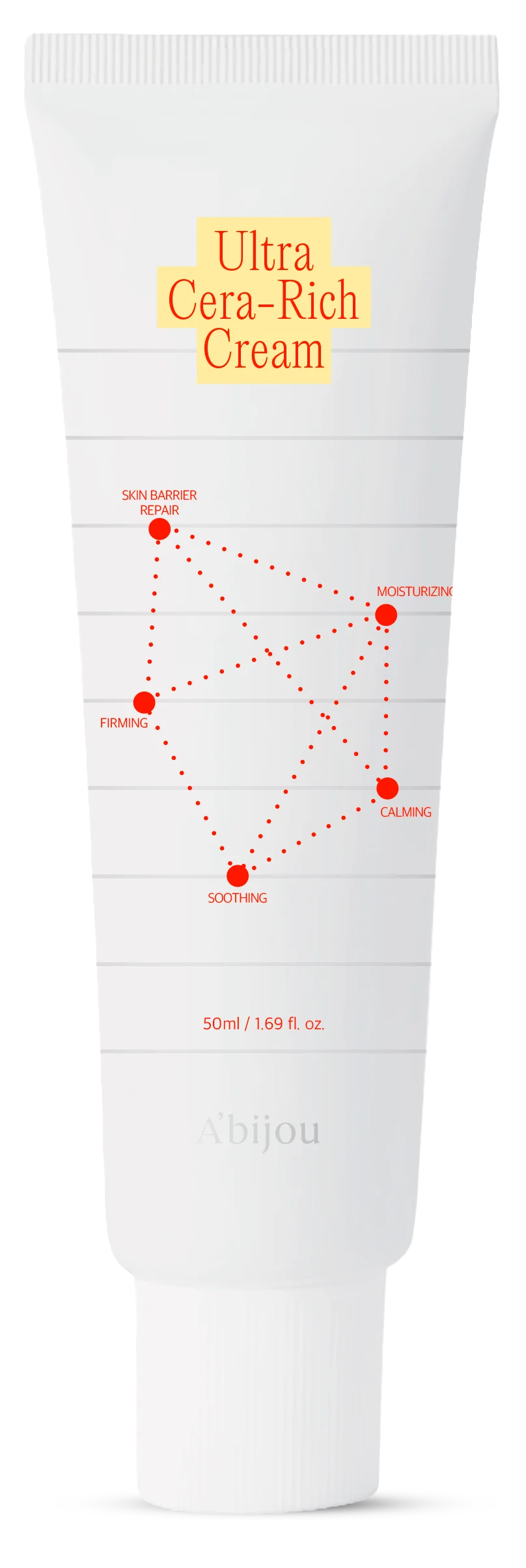 울트라 세라-리치 크림Buy
STEP 1 · 시술 직후 진정·장벽 케어