
Wedding Skincare: When and How Should You Start? A Complete Guide to Effects, Process, and Home Care
Wedding skincare is a care program designed to help prepare skin condition ahead of important events like weddings, by diagnosing skin condition first and then organizing cleansing, hydration, and soothing steps by phase leading up to the date. It involves little to no pain and allows same-day return to daily activities without a separate recovery period, but the perceived effects and their duration vary by individual depending on skin condition, preparation period, and home care. It is best to decide on the exact composition and schedule through consultation with a specialist.
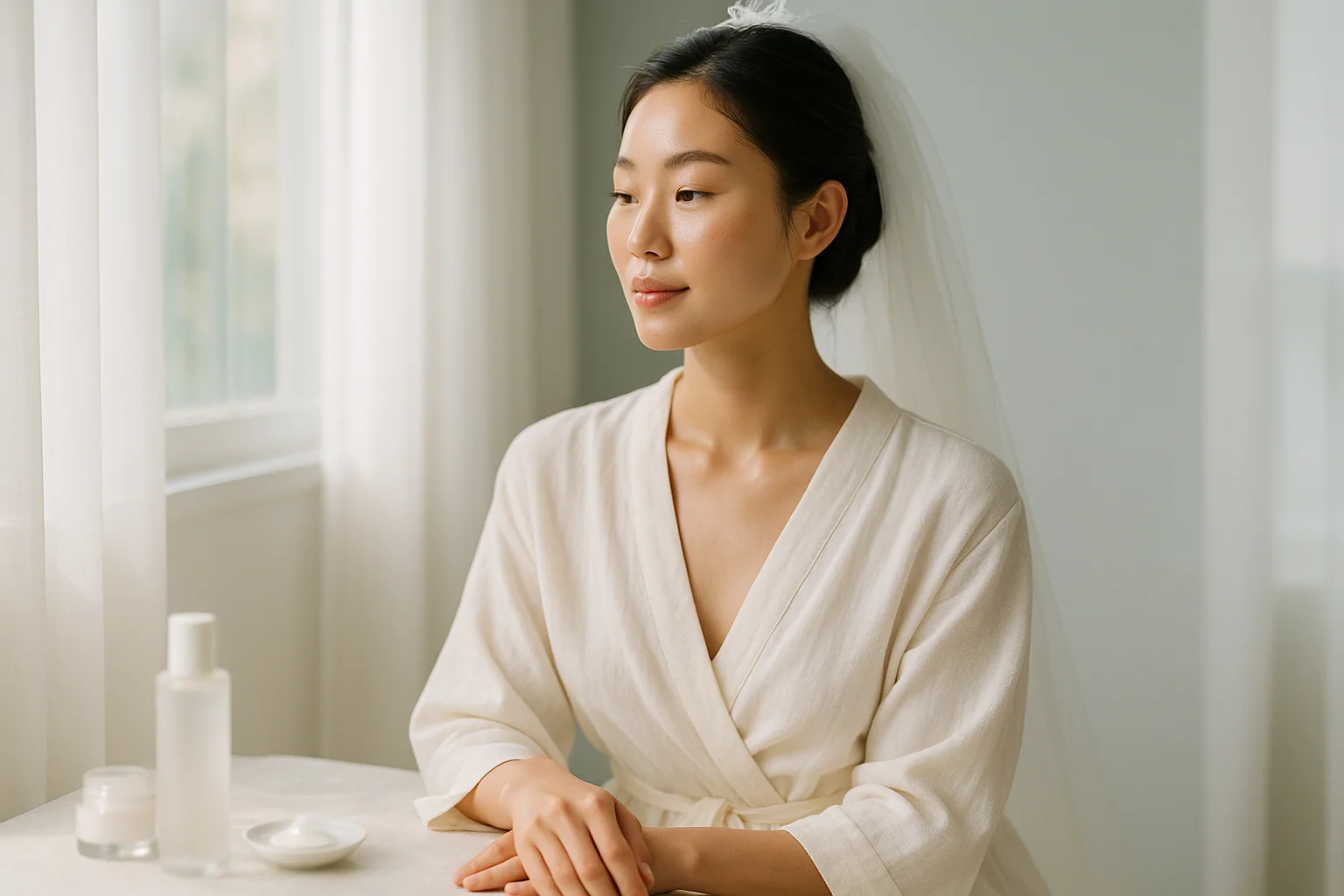
Many soon-to-be brides and grooms wonder when and how to start preparing their skin condition ahead of their wedding. Wedding skincare is not a single specific procedure, but rather a care program that arranges cleansing, hydration, and soothing care in stages according to the event schedule.
Rather than trying to change your skin condition drastically in a single day, it helps to understand this as an approach where you observe your skin condition over a preparation period and gradually add necessary care in sequence.
What Is Wedding Skincare?
Wedding skincare is a care approach that first diagnoses skin condition, then organizes cleansing, hydration, and soothing steps in sequence, timed toward the wedding as the target date. The goal is to deliver moisture and soothing ingredients in stages leading up to the event, to help prepare skin condition in advance.
The composition of care is not a single fixed protocol; it can vary depending on skin condition, remaining preparation time, and individual concerns (such as dryness, dullness, or texture). As a result, the degree of perceived effect and the number of sessions needed also differ from person to person.
Why Soothing and Hydration Are Core Elements — Understanding the Principle of Care
Soothing and hydration form the foundation of wedding skincare. After cleansing removes dead skin cells and sebum buildup, the concept involves repeatedly delivering moisture and soothing ingredients without irritating the skin barrier, in order to manage skin condition.
Depending on need, procedures using heat energy, such as radiofrequency (RF)-based treatments, may also be considered alongside this. These procedures are often explained as delivering heat energy to the dermis, which stimulates the collagen structure to induce a contraction response, followed by a process in which collagen is newly generated and reorganized. However, this is more of an explanation commonly used in the industry rather than a fully established academic mechanism, and changes are often reported to become more noticeable several weeks after the procedure rather than immediately. Whether to combine such procedures should be determined through consultation with a specialist based on skin condition.
Wedding skincare itself, unlike these heat-based procedures, is generally conducted as a mild form of care that does not require anesthesia and involves little to no pain.
Expected Changes and Process
Changes expected from wedding skincare include improved hydration, skin soothing, refined skin tone, and overall improved skin texture. However, it should be understood that these are all care aimed at 'helping' achieve such results, and the degree of effect and when it is felt vary by individual.
The typical process is as follows: ① consultation and skin condition diagnosis, ② cleansing, ③ step-by-step care, ④ soothing care and post-care guidance, ⑤ return to daily life. Since there is little to no separate recovery period, you can generally return to your daily routine on the same day as the session.
Session time is typically about 30 to 60 minutes depending on the composition, and it does not require anesthesia and involves little to no pain. Effects may appear gradually starting right after the session, and how long they last varies depending on the care cycle, individual lifestyle habits, and home care.
Downtime and Precautions
Since wedding skincare is not an invasive procedure, there is little to no separate downtime, and in many cases makeup and daily activities are possible on the same day as the session. However, if your skin is in a sensitive period or needs soothing, temporary redness or sensitivity may be felt right after the session.
Since trying a new type of care for the first time right before the wedding cannot rule out the possibility of an unexpected reaction, it is recommended to test it well in advance of the event date. The specific starting point and care cycle are safest to determine through consultation with a specialist who has checked your skin condition.
The Difference Made by Post-Care Recovery and Home Care
No matter how well you receive step-by-step care, if home care in between sessions is not maintained, your skin condition can easily become unstable again. In particular, since the skin barrier may become temporarily sensitive right after a session, it helps to avoid irritating ingredients and focus on soothing and hydration.
In between sessions, maintaining basic lifestyle habits such as adequate hydration, sun protection, and regular sleep can also help support skin condition.
Home Care Determines Post-Treatment Recovery
On days when you receive care that includes soothing and hydration steps, like wedding skincare, it can help to follow up with home care suited to your skin's condition that day. The Aviju cream is structured in two steps to match this flow. For skin that tends to become sensitive right after a session, STEP1 Ultra Cera-Rich focuses on soothing and barrier care, and during the recovery period as the skin stabilizes, STEP2 Hydro Re-Boosting continues with deep hydration care. However, the cream is a supplementary home care tool for after treatment, and does not replace the effects of the treatment itself.
FAQ
- When is the best time to start wedding skincare?
- There is no single fixed answer, but it is generally recommended to allow enough preparation time to observe your skin condition and build up care in stages. The exact starting point should be determined through consultation with a specialist based on your skin condition.
- When do the effects of wedding skincare become noticeable?
- Many people feel a sense of hydration right after a session, but overall improvements in skin tone or texture tend to appear gradually through consistent care, and this varies by individual.
- Does wedding skincare require downtime?
- There is generally little to no separate recovery period, and in many cases you can return to daily activities on the same day as the treatment. However, depending on your skin condition, temporary sensitivity may occur, so it is best to start well before the wedding rather than trying it for the first time right before the event.
- Can wedding skincare be combined with radiofrequency (RF) lifting?
- They are sometimes considered together, but this should be judged differently depending on skin condition and goals. Whether to combine them and in what order is safest to decide through consultation with a specialist.
- Is home care alone sufficient?
- Home care during the periods between professional sessions can help maintain skin condition, but it does not fully replace professional care. It is recommended to combine soothing- and hydration-focused home care with consultation with a specialist when needed.
Medically reviewed by 아비쥬의원 의료진. (September 10, 2026)