
Criteria for Choosing Vitamin C: Just Check These
Vitamin C isn't just about high concentration—you need to consider the stabilized form, the ingredients it's combined with, and the irritation level suitable for your skin condition. Especially after procedures or during sensitive periods, barrier care should take priority over high-concentration vitamin C, and it's safer to introduce it gradually once your skin condition has stabilized.
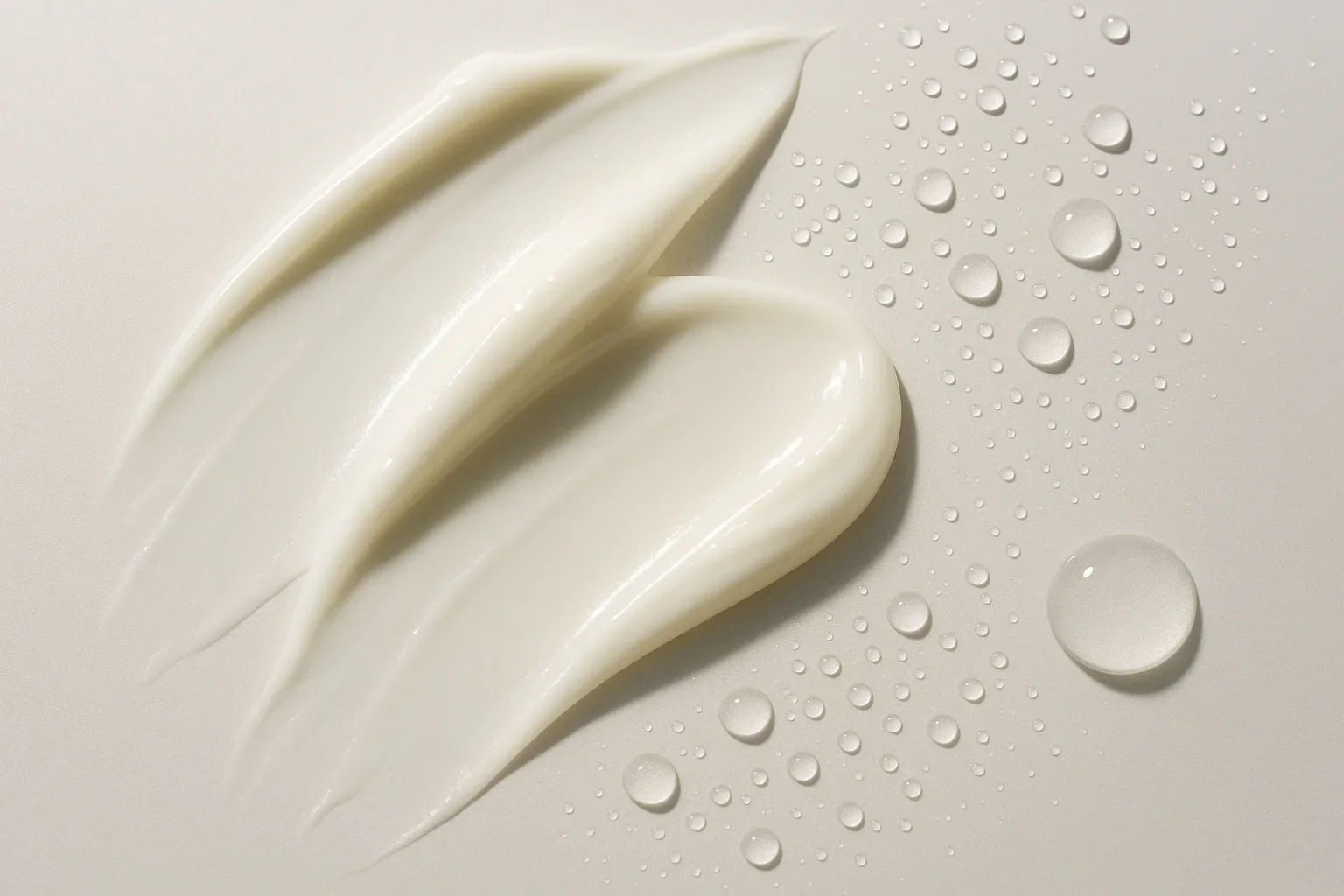
When choosing a vitamin C serum or cream, the first thing to check is not 'how high the concentration is' but 'whether your skin is currently ready to handle this level of irritation.' Vitamin C is a representative ingredient that can help with tone care and antioxidant management, but since irritation levels vary greatly depending on form and concentration, it's important to know the exact criteria for choosing it.
Vitamin C: Why Form and Stabilization Matter
Vitamin C (ascorbic acid) is an unstable ingredient that oxidizes easily when exposed to air and light. As oxidation progresses, discoloration occurs, and irritation reactions such as stinging or redness are more likely to appear when it touches the skin. For this reason, stabilized derivative forms such as ascorbyl glucoside and magnesium ascorbyl phosphate have become widely used recently, offering the advantage of lower irritation from the ingredient itself, allowing for gentler use.
On the other hand, high-purity, high-concentration vitamin C can be relatively more irritating, potentially causing stinging or redness when the skin barrier is thin or during sensitive periods. In other words, the practical criterion for selection should be 'what form it is and whether your skin can currently withstand that level of irritation' rather than 'what percentage it is.'
When to Introduce Vitamin C Depending on Skin Condition
① When skin is generally stable: It's safer to start with a low-concentration derivative form and gradually increase usage while observing your skin's reaction. For the first 1-2 weeks, using it every other day, then increasing to daily use if there's no adverse reaction, is a reasonable approach.
② 1-3 days immediately after lifting or laser treatments: During this period, the skin barrier is temporarily weakened, so applying active ingredients like vitamin C right away can cause noticeable stinging or redness. It's best to delay introducing vitamin C during this period and focus on soothing and barrier care first.
③ 4 days to 2 weeks after treatment (recovery period): This is when redness subsides and skin begins to stabilize. Even at this stage, rather than immediately applying high-concentration vitamin C, it's recommended to gradually reintroduce it starting from a low concentration after hydration and skin texture have recovered to some extent.
④ Dry or seasonal transition periods: Since vitamin C itself is not a moisturizing ingredient, using it without a solid moisture base can cause noticeable tightness and flaking. Using it when the skin is sufficiently hydrated helps reduce irritation.
A step-by-step home care guide for choosing and using vitamin C
Step 1, Check the ingredient list: First check whether the product contains ascorbic acid (pure vitamin C) or a derivative such as ascorbyl glucoside or magnesium ascorbyl phosphate. For sensitive skin, derivatives tend to be relatively less irritating.
Step 2, Patch test: It's safer to apply a small amount on your jawline or behind your ear, watch for a reaction for about 24 hours, and then use it on your entire face.
Step 3, Prioritize hydration: The skin barrier needs to be sufficiently hydrated before applying vitamin C to reduce irritation. It's recommended to build a base with products containing barrier and moisturizing ingredients like ceramides and panthenol, then layer vitamin C on top.
Step 4, Adjust your schedule around treatments: If you're planning a lifting or laser treatment, it's best to pause vitamin C use 1-2 days beforehand, and delay resuming it until your skin stabilizes after the treatment (roughly 1-2 weeks), to reduce irritation.
Before and after treatments, what to prioritize before vitamin C
Immediately after lifting treatments like Ultherapy, Thermage, or Shurink, or skin booster treatments like Rejuran or Juvelook, the skin is in a sensitive state. During this period, home care should focus not on 'what to add' but on 'soothing and replenishing the barrier without irritation.' Restarting active ingredients like vitamin C after this recovery phase has passed is ultimately less burdensome for the skin.
Following this approach, it's natural to use a soothing and barrier-care cream right after treatment, switch to a hydrating and condition-care cream once redness has subsided, and then reintroduce functional ingredients like vitamin C after the skin has fully stabilized.
Post-treatment recovery is determined by home care
During the sensitive period of 1-3 days right after treatment, it's recommended to first focus on soothing redness and barrier care with ZXQMAGAZINETERM Abiju Ultra Cera-Rich Cream ZXQ, then from day 4 onward as redness subsides, replenish hydration and skin texture condition with ZXQMAGAZINETERM Abiju Hydro Re-Boosting Cream ZXQ, and once the skin is confirmed to be stable, gradually reintroduce functional ingredients like vitamin C.
물리적 자극으로 붉어진 피부의 붉은기가 자극 전 수준으로 회복되는 데 도움. 개인차가 있을 수 있습니다.
출처 P&K 피부임상연구센타 시험성적서 (PNK-26224-RI2R)
손상된 장벽이 손상 전 수준으로 회복되는 데 도움. 개인차가 있을 수 있습니다.
출처 P&K 피부임상연구센타 시험성적서 (PNK-26223-RI1R)
FAQ
- Should vitamin C be used in the morning or evening?
- It can be used at either time, but if used during the day, it's good to pair it with sunscreen. Recommended timing may vary depending on the form or product, so check the product instructions as well.
- Can vitamin C and niacinamide be used together?
- These two ingredients are known to be a combination that can be used together safely. However, when combining them for the first time, it's safer to start with a small amount and observe your skin's reaction.
- Can I apply vitamin C serum on the same day as a procedure?
- Right after a procedure, the skin barrier is temporarily weakened, so active ingredients like vitamin C may feel irritating. During this period, it's recommended to prioritize soothing and barrier care first, then resume vitamin C once the skin has stabilized.
- Why does vitamin C sting when applied?
- Temporary stinging can occur due to the product's acidity (low pH) or the characteristics of high-concentration ingredients. If stinging occurs repeatedly, switching to a derivative form or a lower-concentration product may help.
- Does vitamin C alone provide moisturizing?
- Vitamin C itself is not an ingredient intended for moisturizing, so using it together with products containing moisturizing and barrier-care ingredients like ceramides or panthenol can help reduce irritation and maintain skin condition.
Related products
 하이드로 리-부스팅 크림Buy
STEP 2 · 회복기 속보습
 울트라 세라-리치 크림Buy
STEP 1 · 시술 직후 진정·장벽 케어